
How do I eat better for my heart? Can food really lower my cholesterol? Is there a simple way to protect my heart with what’s in my fridge?
You’ve probably heard a lot about the heart-healthy diet, but it can feel overwhelming. It’s tough to know where to start, what to eat, and what to skip. I get it.
Let’s break this down into something simple and real. Because making small, consistent changes is the best way to protect your heart.
What is a Heart-Healthy Diet?
A heart-healthy diet isn’t some complex plan.
It’s all about eating foods that protect your heart, lower cholesterol, and keep your blood pressure in check. You want to fill your plate with foods that are fresh, not processed, and packed with nutrients that your heart loves.
So what should you be eating?

Foods That Boost Cardiovascular Health
There are a few key food groups to focus on:
- Fruits and Vegetables: Fresh produce is packed with fiber and antioxidants. Think berries, spinach, broccoli, and carrots. These fight inflammation and keep your arteries clean.
- Whole Grains: Forget the white bread. Grab brown rice, quinoa, or oats. They help lower cholesterol and balance your blood sugar.
- Lean Proteins: Skip the red meat. Opt for chicken, turkey, beans, and fish like salmon. These are full of healthy fats that your heart will thank you for.
- Healthy Fats: Speaking of fats, the right ones matter. Olive oil, avocado, and nuts have unsaturated fats that lower bad cholesterol (LDL).
- Omega-3s: Fish like salmon, mackerel, and sardines are loaded with Omega-3 fatty acids. They reduce inflammation and protect your heart from irregular beats.
Nutrients That Support Heart Health
Certain nutrients are key for a heart-healthy diet. Let’s run through the most important ones:
- Fiber: It’s your heart’s best friend. Found in whole grains, fruits, and veggies, fiber helps lower cholesterol.
- Omega-3 Fatty Acids: These come from fatty fish, chia seeds, and flaxseeds. They help reduce triglycerides and keep your heart’s rhythm steady.
- Antioxidants: Berries, dark chocolate (yes, you read that right), and green tea are full of these. They protect your heart by fighting off damage from free radicals.
Why These Diets Work: DASH and Mediterranean
Two diet patterns that always come up for heart health are the DASH diet and the Mediterranean diet. They’re both easy to follow and not too restrictive.
DASH Diet
DASH stands for Dietary Approaches to Stop Hypertension.
It’s all about eating more fruits, veggies, whole grains, and lean proteins, while cutting back on salt. The less sodium you eat, the lower your blood pressure goes. And that’s great for your heart.
Mediterranean Diet
The Mediterranean diet is another heavy hitter. It’s full of olive oil, fish, nuts, and loads of veggies. You’ll eat a lot of plant-based foods, healthy fats, and some lean proteins, like fish.
This way of eating has been shown to improve cholesterol levels and protect against heart disease. Plus, it’s pretty tasty.
What You Should Avoid for Heart Health
There are foods that are good for your heart, and then there are the ones you need to limit.
Here’s what to look out for:
- Saturated and Trans Fats: Found in fried foods, baked goods, and fatty cuts of meat, these fats raise your LDL (bad cholesterol). Swap them for healthier fats like olive oil and avocado.
- Added Sugars: Sugary drinks, candy, and even some store-bought sauces sneak in too much sugar. Too much sugar leads to weight gain and high blood sugar—both bad for your heart.
- Sodium: It’s not just table salt. Processed foods, canned soups, and takeout are often loaded with salt. Too much sodium raises blood pressure, which is tough on your heart.
Quick Tip:
- When you shop, check the nutrition label for sodium and added sugars. You’d be surprised how much is hidden in everyday items.
Make Heart-Healthy Eating Easy
A heart-healthy diet doesn’t have to be complicated or time-consuming. Small tweaks can go a long way.
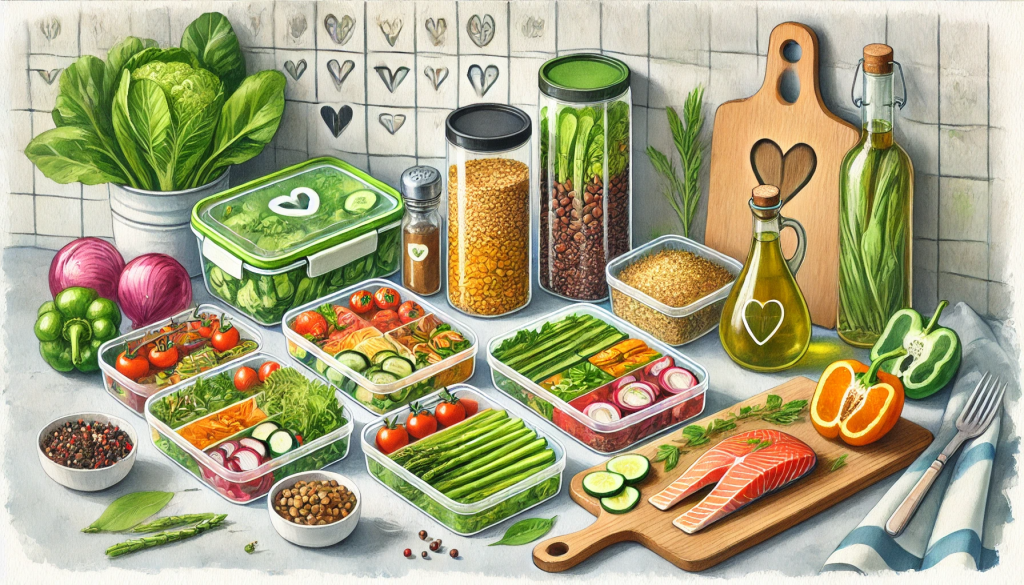
Meal Planning and Preparation
Here are a few simple ways to make this work:
- Batch Cooking: Prepare meals ahead of time so you always have something healthy on hand.
- Stock Your Pantry: Keep staples like whole grains, canned beans, and frozen veggies around so you’re never tempted to grab takeout.
- Healthy Snacks: Swap chips for nuts, seeds, or veggies and hummus. They’re full of healthy fats and fiber.
Dining Out Tips
Eating out? No problem. Here’s how to keep it heart-healthy:
- Skip the Fried Stuff: Go for grilled, steamed, or baked options.
- Ask for Dressings on the Side: That way, you control how much goes on.
- Watch Portions: Restaurant portions are usually huge. Ask for a to-go box when you order and pack half away for later.
Heart-Healthy Diet + Lifestyle: It’s a Package Deal
Eating the right foods is important, but so is how you live. A heart-healthy diet works best when it’s part of a larger lifestyle that supports your cardiovascular system.
Here’s what to focus on:
Get Moving
Physical activity is non-negotiable for heart health.
- Aim for at least 30 minutes of moderate activity most days. This can be anything from walking to biking to swimming.
- If that feels like too much, break it into smaller chunks. Even a 10-minute walk after dinner helps.
Manage Stress
Stress is sneaky.
- Try mindfulness practices, like meditation, to keep stress levels down.
- Yoga or deep breathing exercises can do wonders for your blood pressure.
Maintain a Healthy Weight
Keeping a healthy weight can reduce your risk of heart disease and high blood pressure.
- Combine your heart-healthy diet with regular exercise to maintain a weight that works for you.
By now, you’ve probably noticed a pattern.
The heart-healthy diet isn’t about a quick fix or a strict regimen. It’s about making smart choices, most of the time, and building habits that protect your heart for the long run.
Heart-Healthy Diet: Making it Stick
How do I keep up with a heart-healthy diet when life gets busy? Can I really stick to it long-term without feeling restricted?
These are real concerns. Because it’s not just about starting a heart-healthy diet, it’s about finding ways to make it sustainable, even on your craziest days.
The Real-World Struggle with Heart-Healthy Eating
Let’s be real: sticking to a heart-healthy diet can feel like a challenge.
You’ve got work, family, and all the other things life throws at you. It’s easy to grab what’s quick, which usually means processed, salty, or sugary. But here’s the good news — you don’t have to overhaul your entire life.
Small, Daily Habits That Make the Difference
The trick to a heart-healthy diet is turning small actions into habits. Here’s how you do it:
- Start Your Day Right: Have a breakfast loaded with fiber and healthy fats. Think oatmeal topped with berries or whole-grain toast with avocado.
- Pack Snacks: Keep heart-healthy snacks like nuts, carrots, or apple slices handy so you’re not reaching for chips.
- Hydrate: Drink water throughout the day. Staying hydrated helps curb unhealthy cravings and keeps your energy steady.
Meal Prepping for Heart Health
When time is tight, meal prep can be a lifesaver. Here’s how to stay on track:
- Pick a Day: Choose one day to batch cook for the week. Make a big pot of quinoa or brown rice, roast some veggies, and bake some chicken or salmon.
- Portion It Out: Divide meals into containers so you can grab them on your way out the door.
- Freeze for Later: If you’ve got extra, freeze portions for those nights when you’re tempted to order pizza.
Eating Out Without Derailing Your Diet
We all eat out. And yes, you can keep up a heart-healthy diet at restaurants.
Here’s how to do it:
- Order Smart: Go for grilled fish or chicken, ask for whole grains instead of white rice, and load up on veggies.
- Watch the Sauces: Sauces and dressings are where they sneak in sugars and sodium. Ask for them on the side.
- Split Your Plate: Restaurant portions are often double what you need. Split it in half and save the rest for later.
Real-Life Tips for Sticking to a Heart-Healthy Diet
There’s no magic to sticking to a heart-healthy diet. But there are ways to make it easier:
- Don’t Be Too Hard on Yourself: It’s not about being perfect. If you have a slice of cake or fries, move on and get back to your healthy choices at the next meal.
- Incorporate What You Love: Find heart-healthy versions of your favorite foods. Love burgers? Swap the beef for a turkey patty and add avocado.
- Build a Routine: If you stick to your healthy habits long enough, they’ll become second nature. You’ll crave that big salad at lunch instead of fast food.
Heart-Healthy Diet and Family Life
A heart-healthy diet isn’t just for you. It’s something the whole family can benefit from. And no, you don’t have to make separate meals for the kids.
Here’s how to do it:
- Get Everyone Involved: Let the kids pick out fruits and veggies they want to try. Involve them in meal prep so they feel connected to the food.
- Make Healthy Swaps: If your family loves pasta, switch to whole grain or chickpea pasta. Add a homemade tomato sauce loaded with veggies.
- Healthy Snacks for the Family: Swap chips for homemade popcorn or a bowl of mixed nuts. These are packed with healthy fats that are great for heart health.
The Role of Physical Activity in a Heart-Healthy Diet
Here’s the thing: a heart-healthy diet works even better when paired with physical activity. The two go hand-in-hand.
- Move Throughout the Day: You don’t need a gym membership. Just stay active. Walk the dog, take the stairs, or even park farther from the store entrance.
- Find an Activity You Enjoy: Hate running? Don’t do it. Try swimming, biking, or even dancing around your living room. The best exercise is the one you enjoy and will stick with.
- Stretch It Out: Add in some yoga or stretching to keep your body flexible and help manage stress, which can take a toll on your heart.
Stress Management and Heart Health
We often don’t talk about stress when we talk about a heart-healthy diet, but it’s a big deal. Chronic stress raises blood pressure, and that’s not good for your heart.
Here’s what to do:
- Deep Breathing: Take five minutes a day to just breathe deeply. This calms your nervous system and lowers stress.
- Mindfulness: Try practicing mindfulness or meditation for a few minutes each day. Apps like Headspace make it easy.
- Sleep Matters: Getting enough sleep is crucial for heart health. Aim for at least seven hours a night.
Making a heart-healthy diet part of your daily life doesn’t have to be hard. It’s about small, manageable steps, and before you know it, those steps turn into habits that protect your heart for the long run.
FAQ: Heart-Healthy Diet
Q: What foods are best for a heart-healthy diet?
A: Focus on whole grains, leafy greens, lean proteins (like fish and chicken), and healthy fats from sources like olive oil, nuts, and avocados. The DASH and Mediterranean diets are great starting points for heart health.
Q: How can I reduce sodium in my diet?
A: Cut back on processed foods, choose fresh ingredients, and use herbs and spices instead of salt to flavor meals. When eating out, ask for sauces and dressings on the side, and opt for low-sodium options when available.
Q: Is it okay to have cheat meals on a heart-healthy diet?
A: Absolutely! A heart-healthy diet doesn’t mean perfection. It’s okay to indulge occasionally. The key is balance—make heart-healthy choices most of the time and enjoy your favorites in moderation.
Q: Can I follow a heart-healthy diet if I’m vegetarian or vegan?
A: Yes! Plant-based diets can be very heart-healthy. Focus on foods like legumes, whole grains, tofu, and plant-based sources of omega-3s (like flaxseeds and chia seeds). Just make sure you’re getting enough protein, fiber, and healthy fats.
Q: How much fiber should I eat for heart health?
A: Aim for at least 25–30 grams of fiber per day. Fiber helps manage cholesterol and promotes digestive health. You can find it in whole grains, fruits, vegetables, legumes, and nuts.
Q: How do I stick to a heart-healthy diet when eating out?
A: Choose grilled or baked options instead of fried, load up on veggies, and ask for whole grains like brown rice or quinoa. Be mindful of portion sizes, and remember you can always take leftovers home!
Q: How does physical activity complement a heart-healthy diet?
A: Regular physical activity helps strengthen your heart and improve blood flow, making your diet even more effective. Aim for at least 150 minutes of moderate exercise each week to support heart health.
These FAQs provide practical tips and answers to common questions readers might have while following a heart-healthy diet.

 Vitality for All
Leave a comment